

When you request a PCBA quote from a manufacturer, you often receive a number that seems almost too good to be true—and frequently, it is. What begins as a competitive bid often transforms into a much larger expense once production begins, leaving project managers and procurement teams scrambling to justify budget overruns to their boss. This pattern repeats so consistently in the electronics manufacturing industry that it has become an expected friction point rather than an anomaly. The culprit behind these surprises is rarely dishonesty; instead, it is the gap between what a basic “per-unit assembly cost” actually covers and what a complete, production-ready service truly requires. This article deconstructs the six most common hidden fees embedded in low-cost PCBA quotes and provides you with specific, actionable strategies to identify and eliminate them before they impact your project timeline and budget.
What Is Really Included in a “Low-Cost” PCBA Quote?
A low-cost PCBA quote typically covers only components and basic assembly labor, but commonly excludes non-recurring engineering charges, design-for-manufacturing reviews, testing protocols, logistics coordination, and quality assurance activities. This fundamental misalignment between perceived scope and actual production requirements creates the foundation for cost surprises throughout the manufacturing cycle.
The standard “low-cost” quote model operates on an oversimplified formula: component cost per unit plus assembly labor per unit equals your total price. This approach ignores the reality that PCBA manufacturing involves numerous one-time and variable activities that do not scale linearly with board quantity. A factory quoting $2.50 per unit for assembly may be excluding the $500 stencil charge, the $300 programming setup fee, and the undefined testing methodology that could cost an additional $0.50 to $2.00 per board, depending on complexity.
The distinction between a basic assembly quote and a true turnkey PCBA service is substantial. A complete turnkey service includes material procurement with obsolescence management, component placement and soldering, comprehensive electrical testing, functional verification, traceability documentation, quality certifications, and managed logistics to your final destination. Each of these categories represents either a fixed cost amortized across your order or a variable cost per unit that may not appear as a line item in the initial quote. Understanding this structure is critical because it directly affects how you evaluate competing bids and how you budget for your project.

The 6 Most Common Hidden Fees in Low-Cost PCBA Quotes
1: NRE and Setup Charges (Engineering, Stencils, Programming)
Non-recurring engineering (NRE) charges represent the one-time costs associated with preparing your specific design for production. These costs are independent of quantity and do not diminish regardless of whether you order 100 boards or 10,000 boards. The components of NRE charges typically include solder paste stencil fabrication ($300–$800 depending on precision and size), test fixture programming if custom test jigs are required ($400–$2,000), Gerber file validation and manufacturing engineering review ($150–$500), board panelization setup ($100–$300), and pick-and-place machine programming ($200–$600).
In a real-world example, a hardware startup received a quote of $3.50 per unit for assembly on a 5,000-unit first production run. When they approved the order, they discovered that the quote did not include a solder paste stencil ($600), test fixture customization ($1,200), or engineering review ($250). The total NRE burden amounted to $2,050, which increased their effective per-unit cost by $0.41, bringing the true assembly cost to approximately $3.91 per unit rather than the originally quoted $3.50. For a second production run six months later, the same manufacturer applied the full NRE charges again despite using the same design, arguing that their initial quote was for a single production batch and that each new order required fresh setup.
When requesting quotes, explicitly ask whether NRE charges are included in the per-unit price or listed separately. Request a detailed breakdown that identifies each setup charge individually and specifies whether these charges apply to repeat orders of the same design. Clarify the stencil specifications (thickness, aperture ratio, material) and confirm whether the stencil remains with the manufacturer for future use or whether you will be charged again if you reorder. Additionally, ask whether engineering review and design feedback are complementary or billable, and whether there are any fees for Gerber file modifications during the quoting process.
2: Testing and Inspection Costs (AOI, ICT, Functional Test)
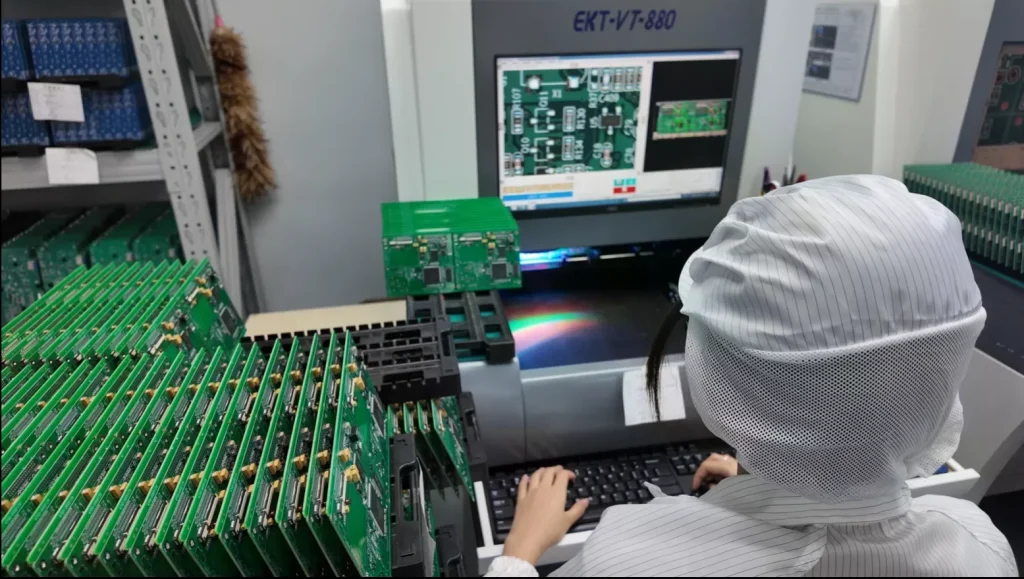
Testing represents one of the most variable cost categories in PCBA manufacturing, yet it is frequently buried or minimally addressed in initial quotes. Automated optical inspection (AOI) scans the assembled board for physical defects such as solder bridges, missing components, and cold solder joints. In-circuit testing (ICT) applies power and verifies electrical connections and component values. Functional testing exercises the board’s actual operating parameters to ensure it performs its intended purpose. Each testing tier adds cost and time, yet many low-cost quotes mention only “standard testing” without specifying which tests are included or at what cost threshold they are applied.
A manufacturer might quote $1.80 per unit for assembly that includes only visual inspection and basic continuity checking. If your design is a power management module where solder joint quality directly affects performance and longevity, functional testing becomes essential. Adding functional testing could increase the per-unit cost by $0.80 to $2.50, depending on test duration and equipment requirements. Additionally, if AOI defect detection leads to rework, the additional handling and troubleshooting time often incurs charges ranging from $5 to $25 per board. These costs accumulate quickly when even 5% of your production run requires rework.
Specific questions to clarify testing scope include: What exact tests are included in the quoted per-unit price, and what is the defect detection threshold for each test? Are there additional charges for boards that fail initial testing and require rework? What is the functional test duration, and does it include edge case or stress testing? Are test results provided with each production batch, and in what format? Ask whether AOI or ICT is sample-based (testing a statistical percentage) or 100% inline, as this directly impacts both quality assurance and cost. Request the manufacturer’s typical defect rate for similar designs to establish a baseline for anticipated rework costs.
3: Material Sourcing and Attrition (Over-Consumption of Components)
Component material sourcing extends beyond simply purchasing the parts listed on your bill of materials. Manufacturers maintain strategic inventory buffers to account for component availability fluctuations, obsolescence risk, and manufacturing attrition—the inevitable waste associated with component handling, placement errors, and test failures. When components are expensive or sourced from suppliers with long lead times, manufacturers often apply what is termed an “attrition multiplier” to ensure sufficient stock to complete your order without incurring expedited fees themselves.
A typical attrition policy might specify a 2% buffer for passive components and a 3% buffer for integrated circuits, meaning if you order 10,000 units requiring 5 capacitors each, the actual component consumption assumes 51,500 capacitors rather than 50,000. For standard, readily available components, this represents a manageable addition to material cost. However, when your design includes specialized microcontrollers, field-programmable gate arrays (FPGAs), or application-specific integrated circuits (ASICs), the unit cost is significantly higher, and a 3% attrition buffer can translate to hundreds of dollars in extra component cost. Furthermore, if component sourcing requires expedited air freight due to extended supply chain disruptions, per-unit material costs can increase substantially without any fault in the manufacturing process itself.
Consider a practical scenario: You design a module requiring 10,000 units of a specific ARM microcontroller with a list price of $8.50 per unit. The manufacturer sources these at a negotiated $7.80 per unit and applies a 3% attrition policy, which means they purchase 10,300 units for $8,034. The three hundred surplus units represent $2,340 in material cost, which translates to an additional $0.234 per completed board. If only a low-cost quote mentioned “material sourcing included” without specifying the attrition policy, this charge may not appear until final invoicing.
When requesting quotes, require the manufacturer to disclose their attrition policy in writing as part of the quotation. Ask specifically which component categories are subject to attrition buffers and at what percentage. For high-value components or specialized parts, inquire whether the manufacturer can reduce the attrition buffer if you provide a slightly higher order buffer yourself. Request confirmation of component sourcing lead times and whether expedited freight will be necessary, including the estimated additional cost. Additionally, establish a clause in your purchase order specifying that surplus components beyond the agreed attrition percentage either return to you or are credited to your account.

4: Engineering Changes, DFM Review, and File Modification Fees
Engineering support and design optimization appear to be value-added services during the sales process, yet they frequently generate unexpected charges once production begins. Design-for-manufacturability (DFM) reviews identify potential manufacturing challenges such as trace spacing conflicts, component placement interferences, or testability issues. While some manufacturers provide basic DFM feedback complimentary, others charge for anything beyond a cursory review, particularly if the review requires design modifications or if your design deviates from the manufacturer’s standard capabilities.
File modification charges emerge when your Gerber files, NC drill files, or assembly files require adjustments to conform to the manufacturer’s production parameters. These modifications might include panelization changes to fit specific equipment capabilities, trace width adjustments to meet manufacturing tolerances, or mechanical feature adjustments to accommodate the factory’s tooling. A manufacturer might charge $50 to $200 per file modification iteration, and if your design requires three or four iterations to achieve manufacturability, those charges accumulate rapidly. Additionally, engineering change orders (ECOs)—formal modifications to your design or specifications after initial approval—often carry administrative fees ranging from $100 to $500, depending on the complexity and timing of the change.
A common scenario involves a hardware team that completes its initial design in-house and submits it to a manufacturer for quoting. The manufacturer identifies that the trace routing in a critical impedance-controlled layer does not meet their manufacturing tolerances and requires modification. They quote $150 to implement these changes. The hardware team approves the modification, production proceeds, and during testing, the team identifies that component placement needs adjustment for thermal management purposes. This ECO carries another $200 charge. By the end of the production cycle, the accumulated engineering support charges total $600 to $1,000, none of which appeared in the original assembly cost per unit.
To avoid these charges, clarify in your initial request whether DFM review is included in the quoting process and whether basic recommendations are provided free of charge. Specify in writing which design aspects are fixed and which are flexible, allowing the manufacturer to provide recommendations without triggering billable modifications. Request a detailed DFM report that explains any recommendations and their impact on cost, quality, or timing. Establish a maximum budget for approved engineering changes and require written approval before any modification work commences. Additionally, ask whether the manufacturer maintains a design template or design rule document that you can reference when developing future designs, reducing the likelihood of manufacturability issues recurring.
5: Expedited Production, Overtime, and Priority Slot Surcharges
Manufacturing capacity operates on a planned cycle: equipment is scheduled weeks or months in advance to accommodate existing customer orders. When you request faster delivery than the standard lead time allows, you are effectively asking the manufacturer to rearrange their production schedule or operate overtime to accommodate your timeline. These expedited requests carry direct costs in the form of overtime labor, premium electricity rates for extended production windows, and opportunity costs associated with displacing other orders.
Expedite fees typically operate on a tiered scale: a 5–10% expedite surcharge for acceleration of 1–2 weeks, a 15–25% surcharge for 2–4 week acceleration, and 30–50% or higher for rush orders requiring production within days. Additionally, some manufacturers charge a “priority slot” fee—a flat charge (typically $500–$2,000) to reserve manufacturing capacity at a specific time—regardless of whether you ultimately use that reserved slot. These charges are often presented as unavoidable consequences of expedited timelines, yet they frequently appear only after initial quotes are accepted.
A product team managing a time-sensitive market window requests a quote for a PCBA assembly with a standard 6-week lead time. They receive a competitive quote based on that standard timeline. As their software development extends two weeks longer than planned, they contact the manufacturer requesting acceleration to the original target date—now only 4 weeks away. The manufacturer applies a 20% expedited surcharge to the material and labor costs, increasing the total cost by approximately 18% (since labor and materials comprise roughly 90% of the total cost). For a 10,000-unit order originally quoted at $50,000, the expedite surcharge adds $9,000 to the project cost, a significant surprise that was not anticipated during budget planning.
When you receive initial quotes, explicitly ask what the manufacturer’s standard lead time is and whether that timeline is guaranteed or subject to capacity constraints. Request a quote that includes the cost impact of various acceleration timelines (such as 4 weeks, 3 weeks, 2 weeks, and rush) so you can make an informed decision about realistic delivery expectations. Include language in your purchase order stating that expedite fees are applicable only for acceleration beyond an agreed-upon baseline timeline and that the baseline timeline is guaranteed. Additionally, clarify whether expedited fees apply to the full order quantity or whether you have the option to split the order—receiving a portion on standard lead time and a portion expedited if necessary—which may reduce overall costs.
6: Logistics, Duties, and Compliance-Related Costs (Shipping, Tariffs, Certifications)
The final assembly cost represents only a portion of the total landed cost—the actual price you pay when finished boards arrive at your facility or your customer’s location. Shipping, tariffs, duties, and certifications for compliance standards such as RoHS (Restriction of Hazardous Substances), ITAR (International Traffic in Arms Regulations), or industry-specific certifications (medical device requirements, automotive functional safety standards) introduce high variable costs that are frequently minimized or overlooked in initial quotes.
Incoterms (international commercial terms) define where responsibility and cost transfer between seller and buyer.
- An EXW (ex-works) quote means you pay for all shipping and insurance from the factory.
- A FOB (free on board) quote means the manufacturer pays for shipping to the port, but you pay from the port to your destination.
- A DAP (delivered at place) or DDP (delivered duty paid) quote means the manufacturer manages shipping to your location and handles all customs clearance and duties.
The difference in cost can be substantial; a $50,000 order shipped EXW versus DDP might differ by $5,000 to $15,000 depending on destination, weight, and applicable tariffs.
Tariff costs are particularly complex for PCBA assemblies because customs classification depends on the specific components, materials, and origins. Assembled PCBAs often attract tariff rates of 2–8% of the declared value, but if your design includes specific regulated components (such as certain microprocessors or RF modules), tariff rates can exceed 15%. Currency fluctuations, anti-dumping duties on Chinese electronics in certain markets, and temporary tariff modifications all affect the final cost. Additionally, if your design requires compliance certifications such as CE marking (European Conformity), FCC approval (United States), or industry-specific requirements, the manufacturer may incur third-party testing costs ranging from $1,000 to $10,000 or higher, depending on complexity. These certification costs are sometimes absorbed by the manufacturer, sometimes shared, and sometimes passed entirely to the customer, often without explicit clarification in the initial quote.
A real example illustrates this complexity: A European automotive supplier orders 5,000 units of a safety-critical PCBA from a Chinese manufacturer. The assembly cost is quoted at $35 per unit, totaling $175,000. However, the order requires ISO 26262 functional safety certification, which adds $8,000 in testing and documentation. The shipment weighs 150 kilograms and is quoted at $2,500 for ocean freight plus $500 for customs clearance. European Union import duties on the declared value of $175,000 at a 6% tariff rate add $10,500. The total cost escalates to approximately $196,500—a 12% increase over the assembly quote—a significant impact that was not clearly articulated in the initial manufacturing quotation.
When requesting quotes, explicitly ask what Incoterms are being offered and request alternative quotes for each major shipping option (EXW, FOB, DAP, DDP) so you can accurately compare costs. Inquire whether the manufacturer has experience with import regulations for your destination country and whether they factor anticipated duties into their quotation. Ask specifically about compliance certifications required for your application and whether those costs are included, excluded, or shared. Request that the manufacturer provide a detailed logistics estimate that itemizes freight cost, insurance, estimated duties, and any handling or documentation fees. For products requiring regulatory certifications, establish whether the manufacturer will support the certification process and at what cost, or whether you will manage certification independently.
| Aspect | “Low-Cost” Quote | Transparent PCBA Quote |
|---|---|---|
| Cost breakdown | Only unit price per board | Itemized: materials, assembly, testing, NRE, logistics |
| Testing | Not clearly defined | AOI/ICT/functional test clearly listed |
| Engineering support | Extra or not mentioned | Basic DFM/DFT review included |
| Logistics | Excluded or vague terms | Clear Incoterms, estimated freight, and duties |
How to Compare PCBA Quotes Fairly (Checklist)
Comparing multiple PCBA quotes accurately requires systematically evaluating whether each quote covers the same scope of work, timeline assumptions, quality standards, and ancillary services. Without this structured approach, you are essentially comparing incomplete or incompatible information, which leads to selecting the lowest-cost option only to discover hidden charges during production.
A systematic comparison process begins with obtaining an itemized cost breakdown from each manufacturer rather than accepting a single per-unit price.
Request that each manufacturer separately list material costs, assembly labor costs, testing costs, NRE charges, engineering support, quality assurance activities, and logistics estimates. This transparency enables you to identify which manufacturer is pricing competitively on assembly labor but less competitively on materials, or which manufacturer is including comprehensive testing while others are offering only basic inspection. By examining component categories individually, you can identify areas where consolidating suppliers might reduce costs or where quality differentiation justifies higher pricing.
Request explicit confirmation of which tests are included in the quoted unit price and which tests are available at additional cost.
Ask whether the manufacturer applies a 100% inline test or sample-based testing, and what their statistical sampling methodology is. Request defect rate data from their past production to establish a realistic expectation for rework costs you might incur. This information allows you to calculate the total cost of ownership (including anticipated rework) rather than focusing solely on per-unit assembly cost.
Inquire specifically about the manufacturer’s component sourcing strategy and attrition policy.
Request that they disclose the expected material waste percentage for your specific design and whether they have alternative component recommendations that might reduce cost without compromising performance. Ask whether they maintain supplier relationships that allow them to source specialized components expeditiously or whether certain components carry extended lead times that might necessitate expedite fees or design substitutions.
Clarify the lead time commitments and expedite the cost structure.
Ask whether the quoted lead time includes all manufacturing processes or whether certain activities (such as final testing or packaging) extend the timeline. Request written confirmation of the guaranteed lead time and specify what happens if the manufacturer fails to meet that commitment. Additionally, obtain quotes for accelerated timelines at 90%, 80%, and 70% of the standard lead time so you can evaluate the cost-benefit of expedited options.
Review the shipping terms and request multiple Incoterms options.
Ask the manufacturer to itemize freight cost, insurance, estimated import duties, and customs handling fees. Inquire whether the manufacturer has experience with your destination country’s import procedures and whether they can facilitate any necessary compliance documentation. Request that they disclose any surcharges for special handling, temperature-controlled shipping, or express delivery options if your product requires them.
Examine quality certifications, component traceability, and warranty conditions.
Ask whether the manufacturer provides first article inspection reports (FAIRs), individual test reports for each production run, and component traceability documentation. Clarify whether they offer any warranty period and what conditions the warranty covers (defective workmanship, component failures, or both). Ask about their process for handling warranty claims and the timeline for resolution or replacement.
Evaluate the level of communication and engineering support offered.
Ask how you will communicate with the manufacturer (dedicated account manager, email support, project management portal), what response time commitments they make, and whether engineering support is included or available at additional cost. Request references from other customers and ask whether you can speak with customers in your industry or region about their experience with the manufacturer.
How to Avoid Hidden PCBA Costs in Future Projects?
Reducing hidden costs requires implementing strategic practices that extend beyond any single manufacturing relationship. These practices begin during the design phase and continue through production and qualification cycles.
Engaging with your manufacturing partner early in the design process—during the engineering review phase rather than after design completion—allows for collaborative optimization that reduces manufacturing complexity and associated costs. A manufacturer who provides feedback on trace routing, component placement, via density, and thermal management before you finalize your design can identify potential issues that would otherwise require costly modifications or rework during production. This proactive engagement typically costs nothing if included as part of sales engineering support, yet it can prevent thousands of dollars in modification charges and production delays. The key is establishing clear communication channels with the manufacturer’s engineering team and seeking their input during design iterations.
Standardizing on components and manufacturing processes across multiple products reduces the non-recurring costs associated with each new design. If your company manufactures three different products that each include a slightly different microcontroller, sensor package, or memory configuration, you incur separate NRE charges for stencil customization, test fixture modifications, and engineering review for each product. Consolidating around a smaller set of standard components reduces the total NRE burden amortized across your product portfolio. Additionally, manufacturers often provide volume-based pricing benefits when you consolidate purchasing around specific suppliers, further reducing material costs.
Planning realistic timelines during product development reduces dependency on expedited charges. Many hardware teams unknowingly create artificial urgency by underestimating design completion timelines or failing to account for manufacturing lead times in their project planning. By building buffer time into your development schedule—scheduling design completion two weeks before your manufacturing deadline rather than one week—you avoid the situation where minor design issues force expedited production. This simple discipline has eliminated more unexpected manufacturing costs than many sophisticated cost-tracking systems.
Establishing long-term relationships with a smaller number of trusted manufacturers creates the foundation for collaborative cost reduction. When a manufacturer knows you will likely return for future production runs, they have an incentive to build institutional knowledge about your design requirements and manufacturing preferences, reducing the engineering overhead associated with each new order. Over time, a trusted partner who understands your quality expectations, timeline requirements, and volume trends can often identify opportunities for process optimization or component substitution that reduce costs without requiring your explicit request.
Creating a standardized bill of materials (BOM) template with pre-validated components and pre-approved suppliers streamlines the sourcing process and allows your manufacturing partner to provide more accurate quotes. When you submit a BOM containing multiple alternative components or components from multiple suppliers, the manufacturer must spend time validating sourcing availability and resolving conflicts, time that often results in billable engineering charges. By pre-validating your BOM and standardizing component selections, you reduce the engineering overhead and allow the manufacturer to provide more accurate quotes with less iteration.
Establishing shared quality targets and visibility into production metrics with your manufacturing partner creates accountability and reduces the hidden costs associated with quality issues. When defect rates exceed agreed-upon targets, rework costs and schedule delays accumulate. By implementing production dashboards that both parties can access—showing real-time testing results, defect rates, and rework metrics—you create transparency that allows issues to be identified and resolved quickly rather than discovered after production completion.
Why Transparent PCBA Pricing Matters for OEMs and Startups?
The financial impact of hidden manufacturing costs extends far beyond the manufacturing invoice itself. For hardware startups, unexpected cost overruns directly consume capital that was allocated for other essential activities: software development, regulatory certification, sales and marketing, or operational runway. A 10–15% cost increase due to hidden fees can represent the difference between a sustainable first production run and a cash flow crisis that forces painful compromises in product quality or market launch timing.
For larger OEM organizations with established product lines, supply chain cost variability directly impacts gross margin and annual profitability. When PCBA costs increase due to manufacturing inefficiencies or hidden charges, the financial burden typically cannot be passed immediately to customers, particularly for long-term supply agreements with fixed pricing. The increased cost thus flows directly to reduced profit per unit, which compounds across high-volume production runs. For a company manufacturing one million units annually at a gross margin of 35%, a hidden $0.50 per unit increase in manufacturing cost represents $500,000 in annual profit loss.
Beyond financial impact, hidden costs create operational friction and misalignment between engineering, procurement, and finance teams. When a manufacturing cost increase surprises the finance department, it triggers a chain reaction of delay and mistrust. The finance team questions procurement’s supplier evaluation methodology. The procurement team must justify the decision to accept quotes that contained hidden fees. The engineering team experiences schedule pressure if costs force production delays or alternative sourcing. This internal friction slows decision-making and creates organizational dysfunction that extends beyond the immediate manufacturing decision.
Transparent pricing eliminates these dysfunctions by establishing clear financial expectations and enabling informed decision-making. When all team members understand exactly what a quoted price includes, what it excludes, and what scenarios might trigger additional costs, they can plan confidently and allocate resources appropriately. A hardware team that understands their PCBA total cost of ownership—including anticipated testing costs, potential rework costs, and logistics charges—can build accurate financial models for product profitability and market viability. They can confidently communicate timelines and budgets to investors, customers, and partners.
From a manufacturing partner’s perspective, transparent pricing also reduces misunderstandings and disputes. When a manufacturer quotes $3.50 per unit assembly labor and separately identifies $2,000 in NRE charges, stencil costs, and expedite fees, the customer understands the basis for the total cost and is less likely to challenge the invoice later. Conversely, when a customer receives a “$3.50 per unit” quote and then is surprised by additional charges, they perceive the manufacturer as dishonest or incompetent, damaging the relationship and reducing the likelihood of repeat business.
How IWDF Solutions Helps Global Customers Avoid Hidden PCBA Fees?
IWDF Solutions approaches PCBA manufacturing through a transparency and partnership philosophy that systematically eliminates the hidden costs embedded in traditional low-cost quotes. This approach differs fundamentally from factory models optimized solely for per-unit cost reduction.
Transparent Quote Structure: Every IWDF Solutions quotation itemizes manufacturing costs into distinct categories: component procurement (including the specific attrition policy applied), assembly labor (differentiated by process type), solder paste stencil fabrication, test and inspection costs (itemizing each test type and whether it is 100% inline or sample-based), engineering review, and logistics. This disaggregated structure allows customers to see exactly where their money is allocated and to identify opportunities for cost optimization. If a customer finds that testing represents 15% of the total cost but that their application permits lower-intensity testing, they can make an informed decision to reduce the testing scope. Alternatively, if a customer discovers that expedited fees represent 25% of additional cost, they can adjust their timeline to avoid unnecessary acceleration charges.
Engineering-Driven DFM/DFT Review: IWDF Solutions’ engineering team provides complimentary design-for-manufacturability (DFM) and design-for-testability (DFT) analysis as part of the quotation process. This analysis identifies potential manufacturing challenges—such as trace spacing conflicts, component placement constraints, or testability issues—before production begins. The engineering review includes specific recommendations for design modifications that reduce manufacturing cost or risk, such as via optimization, component consolidation, or test point placement. By addressing these issues proactively rather than during production, customers avoid expensive engineering change orders (ECOs) and costly rework cycles. This engineering engagement also educates customers about manufacturing constraints, enabling them to design future products with manufacturability in mind and reducing NRE charges for subsequent production runs.
Clear Testing Coverage: IWDF Solutions clearly defines which testing processes are included at standard pricing and which are available as optional enhancements. Standard testing includes automated optical inspection (AOI) for solder joint quality and verification of component presence, in-circuit testing (ICT) to verify electrical connections and component values, and basic functionality testing for digital logic verification. For customers requiring enhanced testing—such as power sequencing verification, thermal stress testing, or extended functional validation—IWDF Solutions provides itemized costs so customers can make risk-based decisions about testing scope. Additionally, customers receive detailed test reports for every production batch, enabling them to understand actual defect rates and rework requirements rather than discovering these issues months later in field returns.
Global Logistics Experience: IWDF Solutions manages logistics through a multi-option model that accommodates different customer preferences and cost constraints. Customers can select EXW (ex-works) pricing if they have established freight relationships and want to manage shipping directly. Alternatively, IWDF Solutions arranges freight and offers FOB (free on board) pricing to port, DAP (delivered at place) pricing with customer handling of customs, or DDP (delivered duty paid) pricing with IWDF Solutions managing complete logistics to the customer’s facility. For each option, IWDF Solutions provides itemized costs that include freight estimates, insurance, and anticipated tariffs or duties. This transparency enables customers to accurately evaluate their total landed cost, rather than discovering unexpected charges upon delivery. Additionally, IWDF Solutions’ experience with import regulations in major markets (European Union, United Kingdom, North America, Southeast Asia) allows them to identify potential duty classifications or regulatory requirements early, avoiding last-minute surprises that delay shipments.
Dedicated Account and Project Management: Customers working with IWDF Solutions receive a dedicated account manager and assigned project manager for each production run. These team members coordinate across engineering, procurement, manufacturing scheduling, quality assurance, and logistics to ensure consistent communication and proactive issue resolution. If a component experiences supply chain delays, the project manager communicates this to the customer and explores alternative sourcing options rather than allowing the delay to propagate through the production schedule. If testing results identify a quality issue requiring rework, the project manager coordinates the rework cycle and manages timeline adjustments. This structured communication prevents the scenario where customers discover critical issues only when they contact the factory requesting a status update.
If your organization currently sources PCBA manufacturing from multiple suppliers or if your existing manufacturing relationships have produced unexpected costs and quality issues, we invite you to discuss your requirements with IWDF Solutions. You can share your current Gerber files, bill of materials, and production specifications for a comprehensive evaluation and detailed cost analysis.
IWDF Solutions will provide an itemized quotation that clearly identifies each cost component, a design-for-manufacturability report highlighting optimization opportunities, and a transparent comparison to your existing supplier costs. This evaluation is provided at no charge and creates an opportunity to understand how transparent pricing and dedicated engineering support can reduce your total manufacturing cost while improving reliability and reducing schedule risk. Submit your design files and specifications through our website inquiry form, or contact our team directly to arrange a consultation.