
When an integrated circuit is locked, repairs and research grind to a halt. Engineers face roadblocks, wasted time, and stalled innovation. The solution? IC unlocking or decryption — done with the right methods, tools, and legal safeguards.
IC unlock or decrypt means bypassing an integrated circuit’s security protections to access its firmware, data, or functions, typically for diagnostics, repair, or security research. Techniques range from software-level debugging to hardware-based invasive methods like decapsulation and fault injection. The legal status varies by country, with some allowing it for research or repair, and others restricting it under anti-circumvention laws.
Let’s break down the meaning, legality, methods, tools, and a detailed step-by-step guide for unlocking microcontroller chips safely and effectively.
1. What Exactly Does “IC Unlock” or “IC Decrypt” Mean?
An IC unlock, or IC decrypt is the process of removing or bypassing security features built into an integrated circuit (IC). Many modern microcontrollers (MCUs) and chips are protected by firmware encryption, read-out protection, or lock bits.
The purpose of these protections is to prevent unauthorized copying, reverse engineering, or tampering. Manufacturers implement them to safeguard intellectual property, prevent counterfeiting, and protect security-critical devices.
Unlocking or decrypting an IC doesn’t necessarily mean “hacking” in a malicious sense — it can be done for legitimate, ethical purposes such as:
- Repairing equipment when the original firmware is inaccessible
- Analyzing hardware for security vulnerabilities
- Testing compatibility between systems
- Recovering important configuration data in legacy hardware
In professional repair labs and research settings, IC unlock is part of the diagnostic and reverse engineering toolkit, not just a black-hat activity.
2. Is Unlocking or Decrypting an IC Legal in My Country?
The legality depends heavily on jurisdiction.
In some countries (like the United States, UK, and EU nations), there are anti-circumvention laws under acts like the DMCA (Digital Millennium Copyright Act) or the EU Copyright Directive. These laws generally prohibit bypassing protections, unless certain exemptions apply.
Common legal exemptions include:
- Right to repair: Unlocking for the sole purpose of fixing hardware you own
- Security research: Analyzing to improve system security (often under specific licensing or disclosure rules)
- Interoperability: Unlocking to allow your hardware to work with other systems
- Data recovery: Extracting firmware to recover critical configuration or operational data
Important: Even in countries where these exemptions exist, the conditions are strict. For example, you might need to be the device’s lawful owner, and you cannot redistribute any proprietary firmware obtained.
Recommendation: Always check your local laws before attempting IC unlock, and keep documentation of your purpose and authorization. Many professional labs require written permission from the device owner before performing the procedure.

3. Methods of IC Decryption
IC decryption methods generally fall into four main categories. Each has unique principles, tools, and risk levels, ranging from purely software-based to physically invasive techniques.
3.1 Software Attack
This method targets the microcontroller’s communication interface and exploits vulnerabilities in its protocol, encryption algorithm, or algorithm implementation.
- Approach: Reverse-engineer communication protocols (e.g., JTAG, UART, SPI) to bypass authentication.
- Common targets: Weak key storage, unpatched firmware bootloaders, poorly implemented crypto.
- Advantages: No physical damage to the IC, relatively low cost.
- Limitations: Requires a deep understanding of protocols and cryptography.
3.2 Electronic Detection Attack
This technique monitors the IC’s analog characteristics (voltage, current, electromagnetic emissions) during normal operation with high time resolution.
- Approach: Use oscilloscopes, spectrum analyzers, or EM probes to capture side-channel data.
- Goal: Derive encryption keys or identify operation timing for further attacks.
- Advantages: Non-invasive, can be combined with other methods.
- Limitations: Requires high-end measurement equipment and precise timing control.
3.3 Fault Generation Technology
This method intentionally induces abnormal operating conditions to cause processor errors, potentially bypassing security checks.
- Approach: Voltage glitching, clock glitching, laser fault injection.
- Goal: Skip security routines or change memory access permissions.
- Advantages: Can work on chips with strong encryption by targeting control flow.
- Limitations: Risk of permanent damage; high learning curve for timing attacks.
3.4 Probe Technology
The most invasive approach — directly exposing the chip’s internal wiring and probing it to read, manipulate, or bypass security circuits.
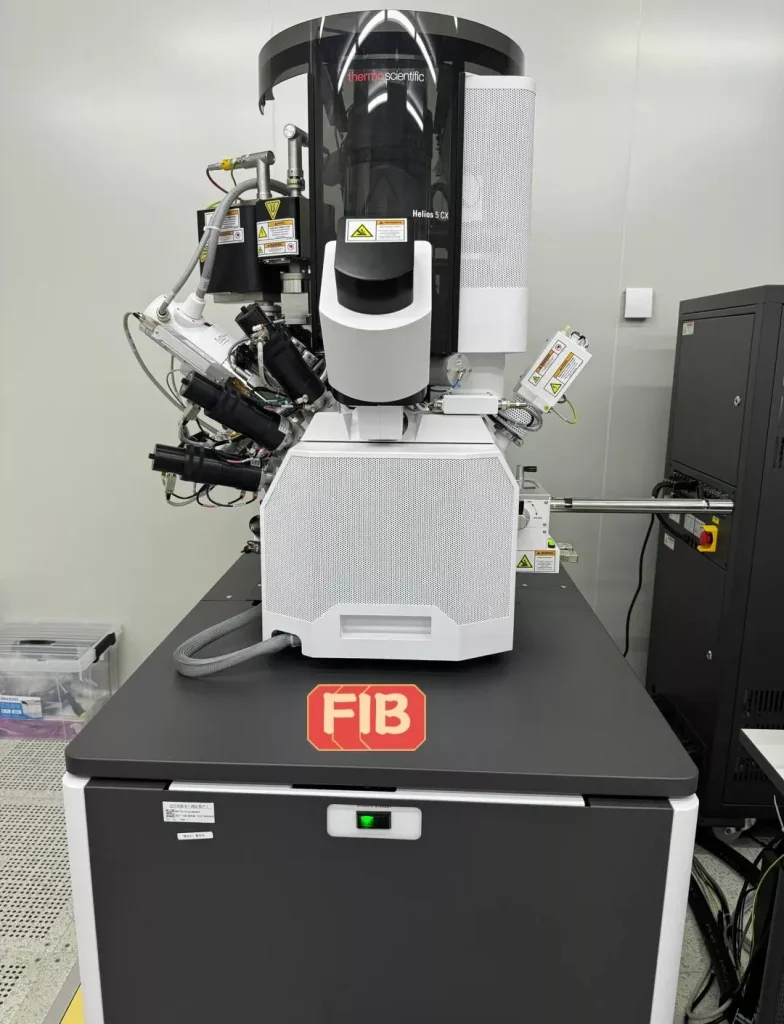
- Approach: Decapsulation, microprobing, Focused Ion Beam (FIB) modification.
- Goal: Direct access to buses or memory cells.
- Advantages: Works even when all other protections are active.
- Limitations: Requires cleanroom conditions, very expensive, and often irreversible.
4. Common Tools for IC Unlocking and Microcontroller Decryption
Different IC unlock methods require different equipment. Below are the most common categories:
| Tool | Purpose | Example Models |
|---|---|---|
| Debug Programmers | Connect to chip interfaces (JTAG/SWD/UART) | Segger J-Link, ST-Link V2, Bus Pirate |
| Chip Programmers | Read/write chip firmware directly | XGecu T56, TL866II Plus |
| Glitching Devices | Perform voltage/clock fault injection | ChipWhisperer, NewAE CW308 |
| Decapsulation Tools | Remove chip packaging for physical access | Acid decap kits, plasma etchers |
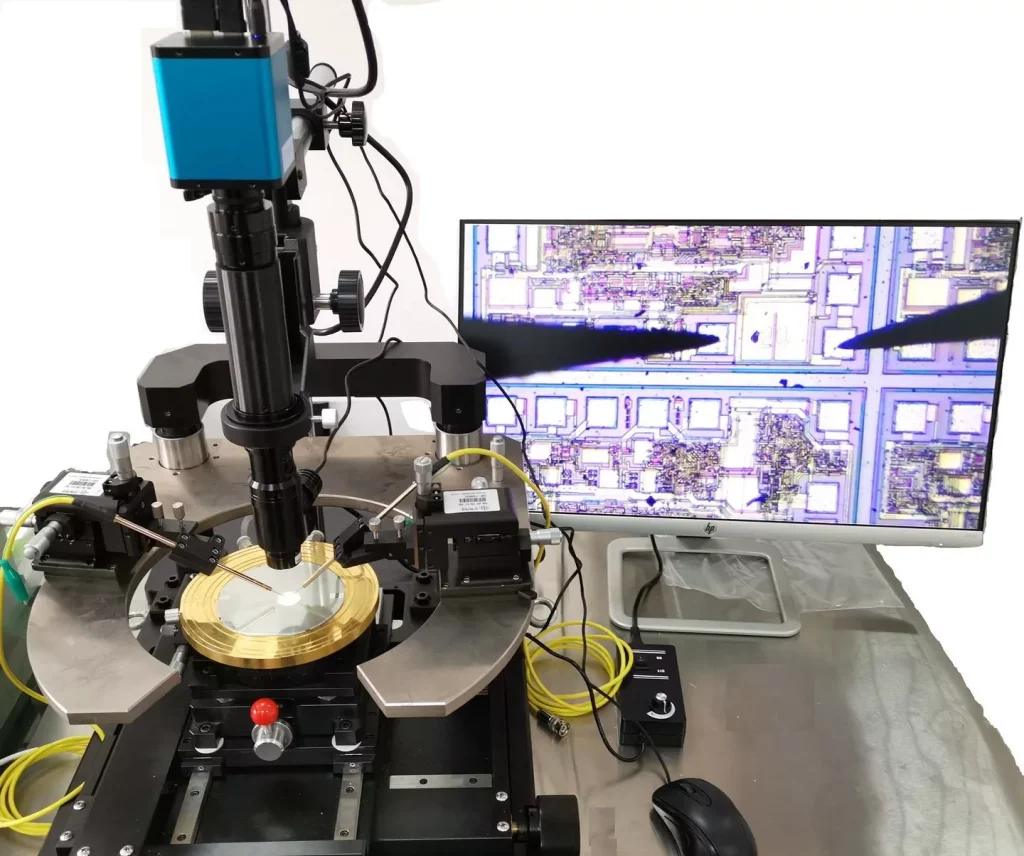
| Microscopy Equipment | View and probe silicon | SEM (Scanning Electron Microscope), optical microscope |
| Probing Stations | Access internal lines in chip | Cascade Microtech probe stations |
| Firmware Analysis Software | Analyze extracted firmware | IDA Pro, Ghidra, Binwalk |
Tip: If you are starting, focus first on debug programmers and firmware analysis tools — these are the entry-level requirements for safe, non-invasive IC unlock attempts.
5. Step-by-Step: How to Unlock a Microcontroller Chip
5.1 Preparation & Safety Considerations
- Confirm legal compliance in your jurisdiction and document device ownership/authorization.
- ESD protection: Wear an anti-static wrist strap and work on a grounded mat.
- Workspace setup: Use a clean, well-lit bench with proper ventilation (especially if chemicals will be used).
- Tool check: Have your programmer/debugger, multimeter, soldering tools, and any specialized attack gear ready.
5.2 Identify the IC Model and Security Features
- Locate the IC on the PCB and note markings.
- Search the manufacturer’s datasheet — check for:
- Debug interface pins (JTAG, SWD, UART)
- Security fuse bits or lock bits
- Bootloader availability and protection levels
- Determine protection type (e.g., code read protection, flash encryption).
5.3 Non-Invasive Methods (Debug Interfaces, Software Tools)
- Pin access: If JTAG/SWD pads are present, solder fine-gauge wires or use a pogo-pin adapter.
- Use a debugger/programmer (e.g., Segger J-Link, ST-Link) to attempt a connection.
- Bootloader trick: Some chips enter factory boot mode if certain pins are pulled high/low on reset.
- Exploit firmware update functions: If the device accepts unsigned updates, you might read flash indirectly.
5.4 Semi-Invasive Methods (Fault Injection, Voltage/Clock Glitching)
- Goal: Disrupt the security check at just the right clock cycle so the chip skips lock verification.
- Setup:
- Remove the chip from the board if necessary.
- Connect glitch hardware (e.g., ChipWhisperer) to Vcc or clock line.
- Procedure:
- Power-cycle the chip while injecting brief glitches.
- Monitor the debug port for unexpected access.
- Adjust glitch timing and voltage amplitude iteratively.
- Risks: Can cause permanent damage if the injection is too aggressive.
5.5 Invasive Methods (Decapsulation, Microprobing, FIB Access)
- Decapsulation: Use fuming nitric acid or a plasma etcher to expose the die.
- Optical or SEM inspection: Identify security fuse locations.
- Microprobing: Use a microprobe station to tap internal buses and dump flash directly.
- Focused Ion Beam (FIB): Modify interconnects to disable security logic.
- Warning: These steps require specialized facilities; not for home labs.
5.6 Extracting Firmware Data
- Once access is gained (via any method above):
- Use programmer software to read flash/EEPROM.
- Save the binary image and make multiple backups.
- Verify data integrity with checksums.
5.7 Post-Processing and Verification
- Analyze firmware using tools like Binwalk, Ghidra, and IDA Pro.
- If the firmware is encrypted, you may need to perform key extraction or side-channel analysis.
- Test the dumped firmware on an emulator or an identical chip before deploying it back into the target device.
Pro Tip for Beginners: Always start with non-invasive methods; they’re cheaper, faster, and far less likely to damage the chip. Move to more aggressive methods only when simpler options fail.

6. Factors in Choosing a Service Provider
If you decide not to perform IC unlocking or decryption yourself, selecting the right service provider is critical. A poor choice can result in permanent chip damage, legal trouble, or leaked intellectual property. Here are the most important factors to evaluate:
Legal Compliance and Certifications
Ask for proof of licenses or certifications (e.g., ISO 9001 for quality management, ISO/IEC 27001 for information security).
Ensure they require written authorization from the device owner before work begins.
Technical Expertise and Capabilities
Check their range of methods: Can they handle non-invasive, semi-invasive, and invasive techniques?
Verify they have specialized equipment (e.g., FIB systems, SEM microscopes, high-end programmers).
Ask about their experience with your specific MCU or IC family — certain chips require niche skills.
Data Security and Confidentiality
Confirm they use secure storage and transfer methods for firmware data.
Insist on a Non-Disclosure Agreement (NDA) to protect your intellectual property.
Ask about their data retention policy — how and when they destroy sensitive files after delivery.
Track Record and References
Look for customer testimonials, case studies, or references.
Search industry forums for feedback on their success rate and professionalism.
Avoid providers with a history of unauthorized copying or resale of client firmware.
Turnaround Time and Support
Some providers offer expedited services for urgent repairs.
Ask about post-service support — will they help you integrate the unlocked firmware back into your workflow?
Ensure they provide full documentation of the process and results.
Pro Tip: A good IC unlock service provider isn’t just a technician — they’re a partner in your repair or research process. The right provider balances technical skill, ethical standards, and legal compliance.
7. Frequently Asked Questions (FAQ)
Q1: What is the main difference between IC unlocking and IC hacking or reverse engineering?
A1: IC unlocking is the authorized removal of security features on devices you own or have permission to access, for repair, research, or data recovery. IC hacking refers to unauthorized access for malicious purposes like counterfeiting or IP theft. Both use similar techniques, but authorization and intent determine legality. Unlocking is legal under proper circumstances; hacking is not.
Q2: Can I legally unlock a microcontroller chip I own in the United States?
A2: Yes, under limited circumstances. The DMCA Right to Repair exemption (renewed in 2023) permits unlocking devices you lawfully own for repair purposes. However, you cannot redistribute the proprietary firmware. You must be the owner and document your repair purpose. Consult an attorney to confirm compliance with federal law and manufacturer licensing agreements.
Q3: Will IC unlocking methods cause permanent damage to the microcontroller?
A3: Non-invasive methods (software debugging, protocol exploitation) cause no physical damage. Semi-invasive methods (voltage/clock glitching) risk damage if timing is miscalibrated. Invasive methods (decapsulation, FIB modification) are often irreversible. Always start with non-invasive approaches and escalate only if earlier methods fail.
Q4: Which IC unlocking tool is best for someone just starting in hardware reverse engineering?
A: The Segger J-Link is the industry standard for beginners. It supports 1000+ microcontroller variants, has extensive documentation, and costs $99–200. Alternatively, the ST-Link V2 clone ($15–50) works well for STM32 microcontrollers and is extremely affordable. For firmware analysis, use free tools: Ghidra and IDA Pro Free.
Q5: How should I evaluate and select a professional IC unlocking service provider?
A: Use a 6-Point Security Audit: (1) Certifications — ISO 9001 and ISO/IEC 27001; (2) Legal Compliance — Require written NDA and device ownership authorization; (3) Technical Capabilities — Multi-method expertise and advanced equipment; (4) Track Record — Customer references and case studies; (5) Data Security — Encrypted transfer, secure storage, guaranteed destruction; (6) Transparency — Detailed documentation and post-service support included.
Q6: What legal considerations must I know before attempting IC unlocking?
A: Key regulations: DMCA (USA) — anti-circumvention laws with repair exemptions; EU Copyright Directive — similar restrictions with interoperability exceptions; WIPO Copyright Treaty — international standards; National laws vary significantly. Always: (1) Document device ownership; (2) Obtain written authorization; (3) Consult legal counsel; (4) Never redistribute firmware; (5) Keep detailed records of legitimate purpose.
Q7: How long does it typically take to unlock a microcontroller using different methods?
A: Timeline varies: Non-invasive (software) = 1–3 days; Semi-invasive (fault injection) = 3–7 days; Invasive (FIB/decapsulation) = 1–4 weeks. Professional service providers typically charge expedited rush fees for turnaround under 5 days.
Q8: What happens if I attempt IC unlocking and the chip is permanently damaged?
A: Chip damage is unrecoverable in most cases. If damage occurs: (1) Stop immediately; (2) Document what happened; (3) Use non-invasive methods on a spare chip if available; (4) Contact professionals for specialized recovery; (5) Consider it a learning investment. Prevention: Always test methods on expendable evaluation boards first.
Q10: Can IC unlocking methods work on modern encrypted microcontrollers with AES-256 protection?
A: Software attacks alone cannot break AES-256, but side-channel attacks (electromagnetic, power analysis, timing) or fault injection may succeed by extracting keys. Advanced chips combine strong crypto with anti-glitching circuits, making attacks harder. Professional labs use Correlation Power Analysis (CPA) and Differential Fault Analysis (DFA). This requires equipment ($50K+) and expertise beyond beginner level.