

Medical electronics are not just gadgets—they save lives. Unlike consumer devices, a single failure in a medical PCB can put patients at risk. That’s why compliance, reliability, and safety form the three non-negotiable pillars of medical device PCB design.
Why Are Medical Device PCBs So Special?
Printed circuit boards in medical devices must meet standards far stricter than those in industrial or consumer products. A mobile phone crashing is frustrating; a pacemaker failing is catastrophic.
Several factors make medical PCBs unique:
- Patient Safety First: Even the smallest design error could result in misdiagnosis, interrupted therapy, or life-threatening device failure.
- Tighter Tolerances: Component placement, solder joint quality, and material reliability are scrutinized at every stage.
- Regulatory Pressure: Every board must comply with regional and international requirements, from the FDA in the U.S. to CE in Europe.
In short, medical PCBs are designed with zero tolerance for failure, and that mindset shapes every design and manufacturing decision.
Unique Challenges of Medical Device PCB Design
1. High Reliability Requirements
Medical devices must operate flawlessly in diverse environments—hospitals, homes, or even inside the human body. Engineers often calculate Mean Time Between Failures (MTBF) to ensure devices meet years of uninterrupted service. A higher MTBF directly translates into trust in life-saving devices.
2. Strict Regulatory Environment
Medical PCBs face one of the toughest regulatory frameworks worldwide:
- FDA (U.S.) ensures safety and effectiveness.
- CE Marking (Europe) confirms conformity with EU health and safety requirements.
- NMPA (China) governs device approvals for the Chinese market.
- ISO 13485 establishes a quality management system covering design, procurement, manufacturing, and testing.
Failing compliance means delayed approvals, costly redesigns, and, more importantly, risk to patients.
3. Miniaturization and High Density
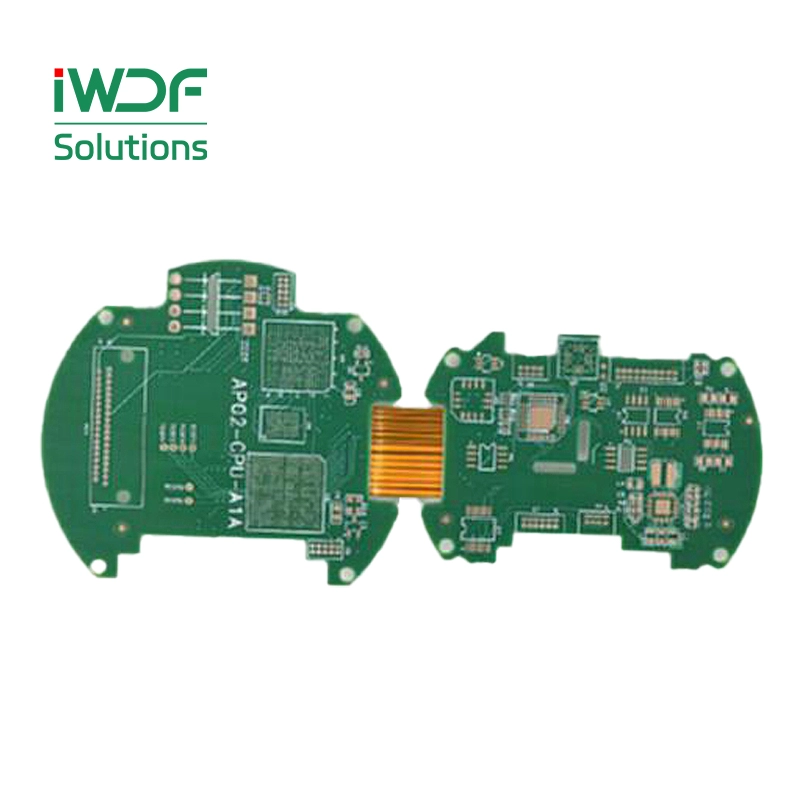
Implantables and wearables push the boundaries of PCB technology. Devices like neurostimulators and smart insulin pumps require:
- High-Density Interconnect (HDI) PCBs for complex circuitry in compact form.
- Rigid-flex boards that combine flexibility with durability, crucial for foldable or space-constrained designs.

4. Signal Integrity (SI) and Power Integrity (PI)
Diagnostic and imaging equipment—MRI, CT, ultrasound—demand pristine signal transmission. Engineers must address:
- Crosstalk reduction between high-frequency lines.
- Power distribution that avoids voltage dips or electromagnetic interference.
Poor SI/PI design could distort readings, leading to misdiagnosis.
5. Biocompatibility and Safety
For devices in direct contact with the human body, materials must meet ISO 10993 biocompatibility standards. Substrate selection, solder masks, and coatings are carefully chosen to prevent toxicity or adverse reactions. Flame resistance (UL 94 V-0) also ensures safety in case of electrical faults.

Key Standards and Specifications for Medical PCB Design
When it comes to medical devices, compliance is not optional—it’s the foundation of trust. Below are the critical standards that every medical PCB must align with:
IPC-A-600 / IPC-6012 Class 3
These standards represent the highest level of PCB reliability requirements. Unlike Class 1 (general electronics) or Class 2 (consumer products), Class 3 is reserved for products where downtime is unacceptable—like pacemakers or ventilators.
- Tighter copper plating tolerances.
- Stricter annular ring requirements.
- More robust conductor spacing rules.
In short, Class 3 ensures maximum durability, and it’s non-negotiable in medical electronics.
ISO 13485:2016
More than just a manufacturing guideline, ISO 13485 is a comprehensive quality management system (QMS) that covers:
- Design control – documentation of every step from concept to prototype.
- Procurement management – suppliers must also follow medical-grade requirements.
- Testing and traceability – every board can be traced back to its lot, materials, and testing results.
Startups and established companies alike rely on ISO 13485 certification to pass audits and satisfy regulators.
UL 94 V-0 Flame Retardancy
Fire safety is a critical part of risk management. UL 94 V-0 classifies plastics based on flame-retardant performance, ensuring PCB materials self-extinguish within 10 seconds without dripping. This is especially important in home-use devices where professional monitoring isn’t constant.
RoHS & REACH
Both European Union regulations focus on environmental and human safety:
- RoHS (Restriction of Hazardous Substances) bans lead, mercury, cadmium, and other harmful elements.
- REACH (Registration, Evaluation, Authorisation, and Restriction of Chemicals) ensures long-term safety by restricting substances of very high concern.
Compliance here demonstrates not only safety but also sustainability, which increasingly matters to investors and healthcare providers.
Design for Manufacturability (DFM) and Design for Testability (DFT)
Even the most innovative PCB design can fail if it’s not optimized for production and testing. That’s why DFM and DFT are cornerstones of medical PCB development.
Design for Manufacturability (DFM)
At its core, DFM is about designing PCBs that can be produced consistently, at scale, and with minimal defects. Key aspects include:
- Avoiding overly tight trace-to-trace spacing that reduces yield.
- Optimizing pad sizes for high-reliability solder joints.
- Consider material stack-up early to avoid costly redesigns.
Our advantage as a design + production company is that our engineers work directly with manufacturing teams during this stage, ensuring a seamless transition from prototype to mass production.
Design for Testability (DFT)
Testing is where quality meets accountability. In medical electronics, 100% testing coverage is mandatory. Common methods include:
- Flying Probe Testing: Ideal for prototypes and low-volume runs.
- Bed-of-Nails Testing: Best for high-volume manufacturing where repeatability is critical.
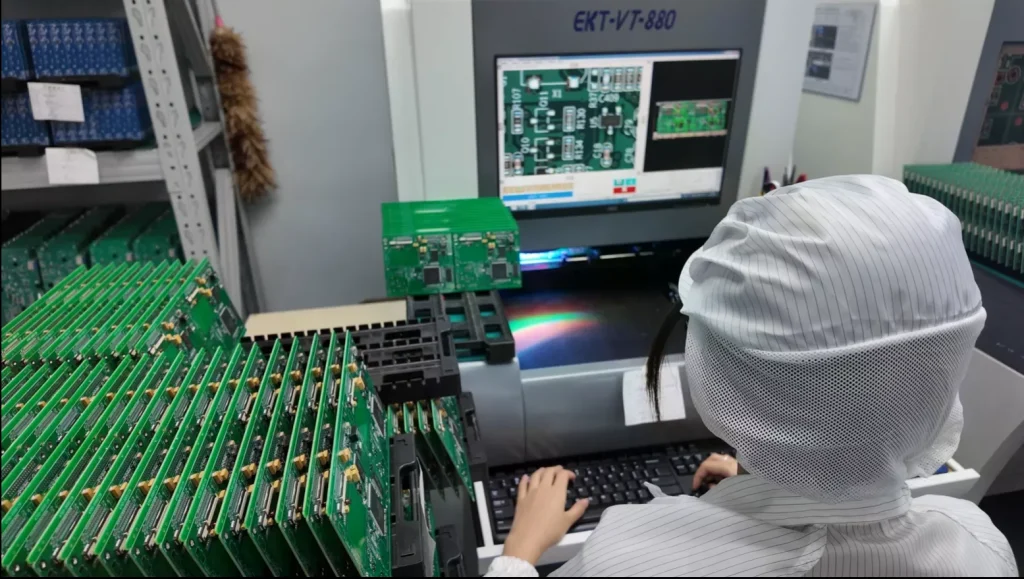
- Automated Optical Inspection (AOI): Detects solder defects, misalignments, or missing components.
- Electrical Testing (E-Test): Ensures complete circuit connectivity, often achieving 100% net verification.
Without DFT, even small hidden defects can slip through—potentially leading to recalls or regulatory failure.


Material Selection and Special Processes
Material choices define how a medical PCB performs over its lifetime. Selecting the wrong substrate or surface finish can compromise reliability, safety, or manufacturability.
High-Performance Substrates
- PTFE (Polytetrafluoroethylene): Used for high-frequency devices like MRI or ultrasound. Offers low dielectric loss but requires special handling during fabrication.
- High-Tg Laminates: These withstand higher reflow temperatures used in lead-free soldering, preventing warpage or delamination.
- Metal Core PCBs: Provide superior heat dissipation for LED-based surgical lamps or high-power monitoring devices.
- Biocompatible Substrates: Certified under ISO 10993, they ensure no toxic reactions in implantable applications.
Surface Finishes
- ENIG (Electroless Nickel Immersion Gold): Popular for its flatness, excellent shelf life, and compatibility with fine-pitch components.
- Immersion Silver: Offers good conductivity, but requires careful packaging to prevent tarnishing.
- OSP (Organic Solderability Preservatives): Eco-friendly and cost-effective, though less durable for long storage.
Each choice must be tailored to the device use case, lifecycle expectations, and regulatory environment. For example, a rigid-flex PCB in a wearable monitor may favor ENIG for durability, while a one-time-use disposable sensor might use OSP to minimize cost.
Case Studies and Application Scenarios
Medical devices vary widely, and so do their PCB requirements. Let’s break it down by category:
Life Support & Implantable Devices
- Examples: Pacemakers, neurostimulators.
- PCB Needs: Extreme reliability, compact form factor, ultra-low power consumption. Biocompatible packaging is non-negotiable.
- Design Tip: Rigid-flex PCBs allow compact placement of circuits while enduring mechanical stress inside the body.
Diagnostic & Imaging Equipment
- Examples: MRI machines, CT scanners, and ultrasound.
- PCB Needs: High-speed, high-density multilayer PCBs with robust signal integrity.
- Design Tip: Differential pair routing, impedance control, and advanced substrates (like PTFE) reduce crosstalk and distortion.
Monitoring Devices
- Examples: ECG monitors, glucose meters.
- PCB Needs: Portability, cost control, and long battery life.
- Design Tip: HDI boards help miniaturize circuits, while low-leakage components extend operational life.
Home & Portable Devices
- Examples: Wearables, home-use diagnostic kits.
- PCB Needs: Durability, user safety, and cost-effective production.
- Design Tip: Rigid-flex technology enables comfortable, compact devices without compromising strength.
Success Story: Blood Pressure Monitor Redesign
Recently, our team worked with a startup developing a next-generation blood pressure monitor. Their initial PCB design faced yield issues during production.
- We re-engineered the board with better stack-up design and optimized trace routing, which improved manufacturability.
- The redesign achieved 30% higher production yield and reduced unit costs, enabling a successful market launch.

Why Choose IWDF Solutions for Your Medical Project?
Designing and manufacturing PCBs for medical devices is not just about technical ability—it’s about trust. Here’s why leading startups and established companies choose us as their PCB partner:
Expertise in Medical Electronics
We have hands-on experience serving clients in the medical sector. Our engineers understand regulatory requirements such as FDA, CE, ISO 13485, IEC 60601, and IPC Class 3. This ensures your design will not only work but also pass compliance audits.
One-Stop Service
Unlike fragmented suppliers, we provide end-to-end support:
- Forward design and layout consultation.
- Manufacturing with strict DFM standards.
- Testing with 100% coverage (AOI, E-test, flying probe).
- Logistics and delivery with full traceability.
This streamlined process reduces risks, accelerates time to market, and ensures accountability.
Certifications & Quality Assurance
We maintain globally recognized certifications, including:
- ISO 13485 – medical device quality management.
- ISO 9001 – general quality management.
- UL Certification – product safety and reliability.
Every board is produced with traceable documentation, ensuring compliance and confidence.


Strict Confidentiality
We know that intellectual property is the backbone of medical device innovation. From NDAs to secure file handling, we protect customer designs with the highest confidentiality standards.
Need a reliable PCB solution for your medical device project? Contact our expert team today for a free consultation and quote. Let’s turn your design into a compliant, safe, and market-ready product.
Summary
Compliance, reliability, and safety define the future of medical device PCBs. From implantables to home-use devices, every detail matters—from substrate selection to regulatory approvals. Whether you’re a startup founder, design engineer, or procurement director, the right PCB partner can make or break your device’s success. Let’s build it together.