
The main components of a turnkey PCBA quote extend far beyond simple parts and labor. A comprehensive quote includes PCB fabrication fees, component sourcing and attrition (overage), assembly labor (SMT/THT), engineering NRE (Non-Recurring Engineering), testing costs (AOI/ICT/Functional), logistics and import duties, and risk buffers for yield loss. Understanding this breakdown is essential for accurate budgeting.
What Is a Turnkey PCBA Quote?
In the electronics manufacturing industry, terminology can often be ambiguous. To ensure clarity, we must define exactly what “Turnkey” means in the context of a quotation.
Turnkey PCBA is a service model where the manufacturer handles the entire production lifecycle. The factory is responsible for fabricating the bare PCB, sourcing 100% of the electronic components, performing the assembly (SMT and Through-Hole), conducting quality testing, and managing final packaging and logistics. The client’s only responsibility is to provide the design idea or design files (Gerber and BOM).
A Turnkey PCBA Quote, therefore, is not just a price tag for soldering. It is a comprehensive financial document that calculates the cost of the entire supply chain and manufacturing workflow. It represents a shift from a “labor-only” pricing model to a “product-delivery” pricing model. When you receive a quote from IWDF Solutions, you are looking at a holistic calculation designed to take a digital design and convert it into a physical, functional product delivered to your dock.

Why “Parts + Labor” Is Not the Full Story
A common pitfall for procurement managers and junior engineers is oversimplifying the cost structure. It is easy to look at a Digi-Key cart total (Parts) and a standard soldering per-point rate (Labor), sum them up, and expect that to be the final price.
However, Parts + Labor is an incomplete equation. This calculation ignores the operational reality of manufacturing.
The Hidden Costs of Manufacturing
If you only budget for parts and labor, you are neglecting the infrastructure required to execute the project. You miss the cost of setting up the machines, the cost of the components that get lost during loading (attrition), the engineering time required to review the files for errors, and the logistics of getting 50 different line items to the factory floor simultaneously.
If a supplier quotes you strictly on parts and labor, they are likely hiding costs that will appear later as “expedited fees,” “setup charges,” or “testing surcharges.” Alternatively, they may be cutting corners on quality control processes that are not immediately visible but will result in higher failure rates.
Comparison: Basic vs. Professional Turnkey Quote
To visualize the difference, compare what many buyers expect versus what a professional quote actually contains:
| Cost Category | “Parts + Labor” Expectation | Full Turnkey PCBA Quote Reality |
|---|---|---|
| Material | Sum of component unit prices. | Unit prices + Overage (attrition) + Sourcing fees + Incoming inspection (IQC). |
| Assembly | SMT point cost. | SMT points + Reflow profiles + Manual insertion + Cleaning + Profiling. |
| Setup/NRE | Often ignored/forgotten. | Stencils + Machine programming + Feeder setup + DFM Review. |
| Testing | Assumed included. | AOI + X-Ray + ICT fixtures + Functional testing labor. |
| Logistics | Just final shipping. | Component inbound freight + Warehousing + Customs/Duties + Final outbound shipping. |
By understanding the full scope, you avoid “sticker shock” and can have a more intelligent conversation with your manufacturer about cost drivers.
The Top 7 Components of a Turnkey PCBA Quote
To evaluate a quote effectively, you must deconstruct it. Below are the seven fundamental cost drivers that constitute a professional Turnkey PCBA quote.
PCB Fabrication Cost
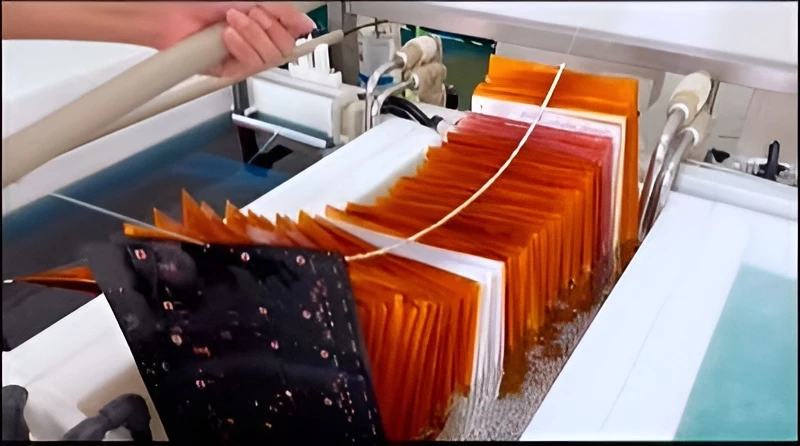
This is the foundation of your project: the bare board itself. The cost of the PCB is never a flat rate; it is highly sensitive to design specifications.
- Base Materials & Layers: Standard FR-4 material is cost-effective, but if your design requires high-frequency materials (like Rogers) or high-Tg materials for high-temperature environments, raw material costs increase significantly. Similarly, every additional layer pair increases lamination cycles and material usage.
- Via Techology: Standard through-holes are cheap. However, if your design density requires blind vias (connecting outer layers to inner layers) or buried vias (connecting internal layers only), the fabrication complexity and price skyrocket due to the need for sequential lamination.
- Surface Finish: The finish protects the copper pads. HASL (Hot Air Solder Leveling) is the cheapest but offers poor planarity. ENIG (Electroless Nickel Immersion Gold) is the industry standard for SMT because it is perfectly flat and corrosion-resistant, though it costs more. Hard Gold is necessary for edge connectors but is expensive.
- Panel Utilization: This is a hidden efficiency factor. If your PCB shape is irregular, you may waste 40% of the FR-4 panel. A quote often includes the cost of this waste. Optimizing your board size to fit standard panel sizes can significantly reduce unit price.
Pro Tip: Allow your manufacturer to suggest “Panelization” arrays. They know their standard production panel sizes and can arrange your boards to minimize waste, lowering your fabrication cost.
Component Sourcing and BOM Management
This is often the most volatile part of the quote. It involves more than just the price of the chip; it involves the logistics of acquisition.
- Pricing Tiers & MOQs: A resistor might cost $0.001 in reels of 10,000, but $0.05 if you only buy 100 cut tape. If your build requires 100 units but the Minimum Order Quantity (MOQ) is 5000, the quote must account for that excess inventory.
- Overage (Attrition): Pick-and-place machines are not perfect. They drop parts. Loading a feeder requires a “leader” of tape that gets wasted. A professional quote adds 3% to 5% extra passive components (resistors/capacitors) to account for this manufacturing loss.
- Sourcing Channels: Sourcing from authorized distributors (Mouser, Digi-Key, Arrow) guarantees authenticity but may have higher prices. Sourcing from the open market can be cheaper but carries risk. A turnkey quote includes the “sourcing fee”—the labor required for the procurement team to verify stock, negotiate pricing, and manage the supply chain.
- Cross-Reference & Alternates: If a specific capacitor is out of stock with a 50-week lead time, the sourcing team spends time identifying valid alternatives. This engineering effort is part of the management cost.
Pro Tip: In your BOM, explicitly mark “Equivalents Allowed” for passive components. This gives the procurement team the flexibility to buy readily available brands, avoiding delays and MOQ fees.
Assembly Process and Labor
Assembly costs are calculated based on time and complexity, not just the number of solder joints.
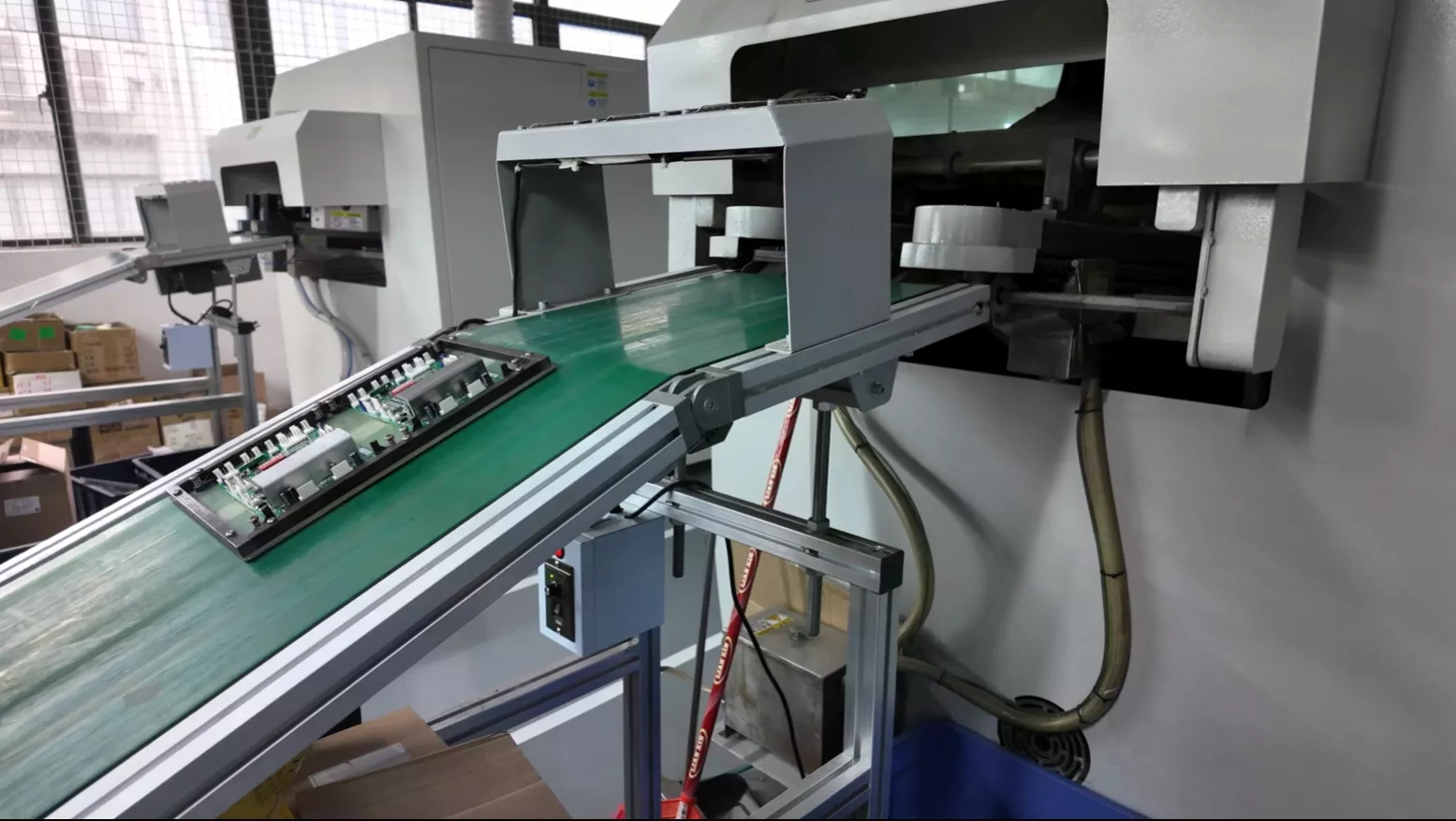
- SMT vs. THT: Surface Mount Technology (SMT) is automated and generally cheaper per point in high volumes. Through-Hole Technology (THT) often requires manual insertion or wave soldering, which is more labor-intensive. A board with 90% THT parts will cost significantly more to assemble than a board with 90% SMT parts.
- Pitch and Package Size: Placing a large 0805 resistor is fast. Placing a 0201 resistor or a BGA (Ball Grid Array) with 0.4mm pitch requires high-precision machines that run slower to ensure accuracy. Slower run-rates equal higher machine-hour costs.
- Double-Sided Assembly: If you have components on both the top and bottom sides, the PCB must pass through the SMT line and reflow oven twice. This effectively doubles the handling time and setup time for the assembly phase.
- Special Processes: Requirements like conformal coating (waterproofing protection), potting, or underfill for BGAs add distinct steps to the process, requiring dedicated equipment and curing time.
Pro Tip: Minimize THT components wherever possible. If you can replace a THT header with an SMT header, you might save manual labor costs and wave soldering setup fees.

Engineering NRE and DFM/DFT Review
NRE (Non-Recurring Engineering) refers to one-time setup costs. These are vital for preparing the production line.
- DFM/DFT Review: Before production begins, engineers review your Gerber files (Design for Manufacturing) and BOM. They check for pad-to-trace violations, component footprint mismatches, and thermal issues. This intellectual labor prevents costly scrap later.
- Stencils: SMT assembly requires a stainless steel stencil to print solder paste onto the board. These are laser-cut specifically for your design.
- Programming: The pick-and-place machines, AOI inspection cameras, and reflow ovens must be programmed with the specific coordinates and thermal profiles of your board.
- Fixtures: If you have THT components, you may need a “Wave Solder Pallet” to mask SMT parts. If you need testing, you may need a “Bed of Nails” test fixture.
Pro Tip: NRE is a one-time fee. If you plan to re-order, ask the supplier if they store the stencils and programs. For repeat orders, these costs should drop to near zero.
Testing, Programming, and Quality Assurance
You are paying for a functional board, not just an assembled one. Quality Assurance (QA) is a significant cost component that ensures reliability.
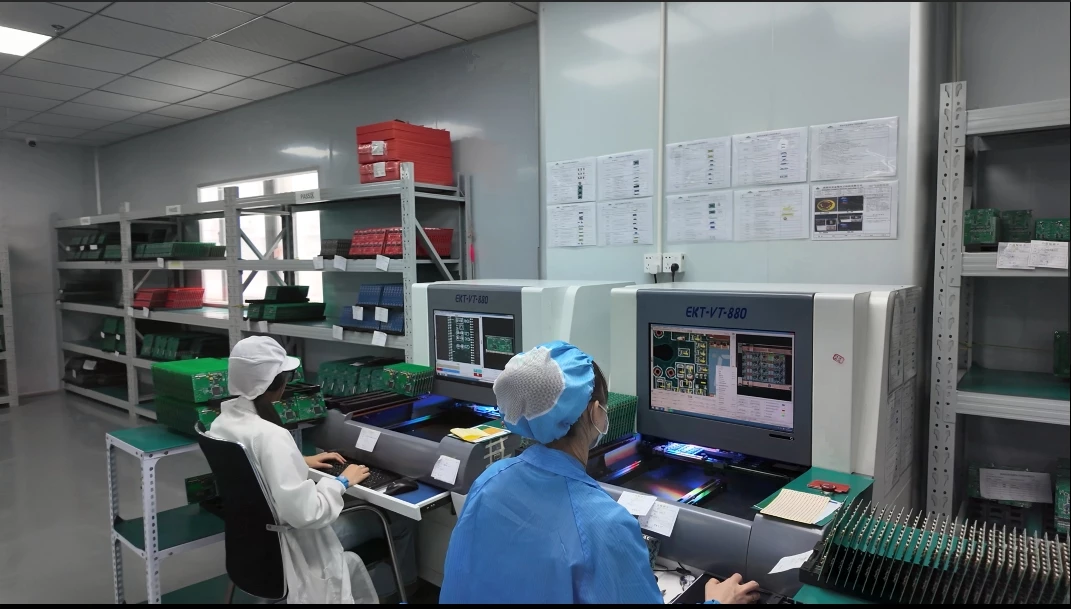
- AOI (Automated Optical Inspection): Cameras scan the soldered board to check for missing parts, skew, tombstoning, and polarity errors. This is standard for SMT.
- X-Ray Inspection: Essential for BGAs, QFNs, and LGAs where solder joints are hidden underneath the package. X-ray is the only way to inspect for voids or shorts in these areas.
- ICT (In-Circuit Test) & FCT (Functional Test): ICT checks for shorts and opens using a probe fixture. FCT involves powering up the board and running firmware to simulate real-world usage. FCT requires custom setups and operator time per unit.
- IC Programming: If you need the factory to flash firmware onto your Microcontroller (MCU), this adds a step. It can be done pre-assembly (automated) or post-assembly (manual via headers), impacting the cost differently.
Pro Tip: Define your “Test Coverage” early. 100% Functional Testing costs more than random sampling, but for high-value industrial boards, the cost of shipping a dead unit is far higher than the cost of testing.
Supply Chain, Logistics, and Import-Related Costs
Moving physical goods across borders involves financial friction that must be accounted for.
- Inbound Logistics: The factory must pay shipping to get components from Digi-Key (USA) or Mouser (Europe) to the assembly facility in China. Even if the parts are cheap, the FedEx fees add up.
- Warehousing: If you buy components in bulk for future scheduled deliveries (JIT), the factory may charge a small fee for climate-controlled storage (essential for moisture-sensitive devices).
- Outbound Shipping & Incoterms: The final quote includes shipping the finished PCBA to you. The price depends on the Incoterms. EXW (Ex Works) means you pay for shipping separately. DDP (Delivered Duty Paid) means the quote includes shipping and all import taxes/VAT.
- Packaging: Proper ESD (Electrostatic Discharge) shielding bags, bubble wrap, and robust carton boxes are required to prevent damage during transit.
Pro Tip: Ask for a breakdown of shipping terms. DDP is the hassle-free option where the price you see is the price that lands at your door, with no surprise customs bills.
Risk Buffers, Yield Loss, and After-Sales Support
Professional manufacturers build a risk model into their pricing to ensure long-term sustainability and support.
- Yield Loss: In any manufacturing process, a small percentage of boards may fail quality control. The quote often includes a calculated yield loss (e.g., 98% yield). This ensures that if 100 boards are ordered, and 2 fail, the cost of those 2 is absorbed without the manufacturer losing money or the customer receiving fewer units than ordered.
- Exchange Rate Fluctuation: For international transactions, currency shifts between the USD and RMB can impact margins. Quotes typically have a validity period (e.g., 30 days) to hedge this risk.
- Warranty & Support: A “cheapest possible” vendor might disappear when you find a bug. A reputable vendor builds a small margin into the quote to fund a support team that can handle RMAs (Return Merchandise Authorization) and technical inquiries after delivery.
Pro Tip: A quote that seems “too good to be true” usually lacks these buffers. This means if something goes wrong, that vendor will likely refuse to fix it because they have no margin left to cover the rework.
How These Components Affect Cost, Lead Time, and Risk
Understanding the components is step one. Step two is understanding the trade-offs. Every decision you make regarding these 7 components pulls a lever on Cost, Lead Time, or Risk.
Below is a summary of how these variables interact.
Overall Cost Impact
The relationship between NRE and Unit Price is inversely proportional.
- High NRE, Low Unit Price: Investing in high-quality test fixtures and optimized panelization costs more upfront (NRE) but reduces the per-unit assembly time and waste, lowering the unit price for large batches.
- Low NRE, High Unit Price: Avoiding tooling charges means using manual labor or less efficient processes, which keeps the per-unit cost high.
Lead Time Impact
The supply chain is usually the bottleneck.
- Component Selection: Using a niche chip from a boutique manufacturer might add 20 weeks to your lead time compared to a generic TI or STMicro chip.
- PCB Complexity: A standard 2-layer board takes 3 days to fabricate. A 12-layer HDI board with buried vias might take 15 days.
Risk Impact
Cutting costs often increases risk.
- Skipping Tests: removing Functional Testing saves money and time, but increases the risk of sending Dead-on-Arrival (DOA) boards to your end customers.
- Cheaper PCBs: Using lower-grade FR4 material saves pennies but increases the risk of board warping during the reflow oven process.
| Component Decision | Cost Impact | Lead Time Impact | Risk Impact |
|---|---|---|---|
| Using Generic Passives | Lowers Cost (Cheaper parts) | Reduces Time (Available stock) | Neutral (If specs match) |
| Increasing PCB Layers | Increases Cost (More material) | Increases Time (Complex fab) | Lowers Risk (Better signal integrity) |
| Adding 100% Functional Test | Increases Cost (Labor/Fixtures) | Increases Time (Testing duration) | Drastically Reduces Risk (Zero defects) |
| Choosing Express Shipping | Increases Cost (Air freight) | Reduces Time (Days vs. Weeks) | Neutral |
How to Compare Turnkey PCBA Quotes from Different Suppliers?
When you receive quotes from three different vendors, the bottom-line numbers might differ by 20% or more. How do you choose? Do not simply pick the lowest number. You must perform an “Apple-to-Apples” comparison.
Check the BOM Sourcing Strategy
Did Vendor A quote using Authorized Distributors (Digi-Key/Mouser) while Vendor B quoted using Gray Market Brokers?
- Vendor B will be cheaper, but you risk receiving counterfeit or used chips.
- Advice: Ask the supplier to specify the component origin.
Verify the Test Scope
Does the quote include testing?
- Vendor A might include AOI and Functional Testing.
- Vendor B might only include visual inspection.
- Vendor B is cheaper, but you will likely spend more money troubleshooting bad boards yourself.
Look for Hidden Fees
Analyze the “Terms and Conditions.”
- Are there setup fees hidden in fine print?
- Is the shipping cost included (DDP) or excluded (EXW)?
- Is there an “Over-consumption” or “Attrition” fee added at the end?
Data Transparency
A high-quality supplier will provide a breakdown similar to the structure discussed in this article. If a supplier sends you a single lump sum number like “$5,000” with no explanation, be wary. You have no way of knowing what is included or where they are cutting corners.
IWDF Solutions Approach: We believe in transparent quoting. We provide itemized breakdowns so you can see exactly how much goes into materials, labor, and testing. This allows us to work with you to value-engineer the product—cutting costs where it makes sense, without sacrificing quality.
What Information Should You Provide to Get an Accurate Quote?
Garbage in, garbage out. To get a precise quote that avoids future price hikes, you must provide the factory with complete and accurate data.
Essential Documentation Checklist
- Gerber Files (RS-274X format): This is the industry standard. Include all copper layers, solder mask, silkscreen, drill files, and board outline.
- Centroid/Pick-and-Place File: The XY coordinates for every component. This helps the engineer calculate assembly time accurately.
- Bill of Materials (BOM): This must be an Excel format containing:
- Reference Designator: (e.g., C1, R1, U1)
- Quantity: Per board.
- Manufacturer Part Number (MPN): Critical. Do not just say “10uF Capacitor.” Say “Murata GRM188R61A106KE69D.”
- Description: Package size (0402, 0603), tolerance, voltage.
- DNI/NC: Mark components that should “Do Not Install.”
- Assembly Drawings: A PDF showing part polarities and special instructions.
- Quantity & Lead Time: Quote for multiple quantities (e.g., 5, 50, 500 units) to see price breaks. State your required delivery date.
- Testing Requirements: Do you need firmware flashing? Do you have a test procedure? If so, provide the guide.
Providing this level of detail signals to the manufacturer that you are a serious professional, which often results in faster priority handling of your quote.
How IWDF Solutions Builds Transparent, Predictable Turnkey PCBA Quotes?
At IWDF Solutions, we understand that trust is the currency of B2B manufacturing. We don’t just give you a price; we give you a strategy for production.
Our Calculation Logic
When we generate a quote, we assess the 7 key components tailored to your project:
- We analyze your BOM to find high-risk parts and suggest lower-cost, high-availability alternatives.
- We separate NRE charges from unit prices, so you can see how your costs will scale as you move from prototype to mass production.
- We include transparent logistics options, helping you choose between speed (Air) and cost (Sea/Rail).
Cost Reduction Engineering
We don’t just print what you send. Our engineering team performs a pre-quote DFM review. If we see that a minor change in your PCB layout could save 10% on fabrication yield, or that changing a specific connector could save 3 weeks of lead time, we tell you before you pay.
The Workflow
- Evaluation: You send files; we check for completeness.
- Sourcing: We ping our network of authorized distributors for real-time stock.
- Engineering: We calculate the precise SMT cycle time and testing requirements.
- Quotation: You receive a detailed PDF breakdown.
If you are currently planning a new electronic product or looking to move an existing project to a more reliable partner, let us prove our value. Send your Gerber and BOM files to IWDF Solutions today. We will provide you with a detailed breakdown based on the 7 cost components discussed here, giving you the clarity you need to make the right decision.
FAQ: Common Questions from OEM and Hardware Teams
Q1:How is NRE charged in a turnkey PCBA quote?
NRE (Non-Recurring Engineering) is charged as a one-time upfront fee. It covers the creation of solder stencils, programming of SMT machines and AOI cameras, and the design of test fixtures. If you re-order the same revision, you typically do not pay NRE again.
Q2: How much more expensive is a turnkey vs. a consigned assembly?
Turnkey often appears 15-20% higher on paper because it includes component overages, procurement labor, and logistics management. However, if you factor in your own internal cost of purchasing, shipping, kit preparation, and managing shortages, Turnkey is usually cheaper and significantly faster for the total project.
Q3: How can I reduce my turnkey PCBA cost without sacrificing quality?
Optimize your BOM by replacing US/EU brand passive components (resistors/capacitors) with high-quality Asian equivalents (like Yageo or Uni-Royal). Also, panelize your PCBs to maximize material usage. Finally, engage in DFM reviews early to eliminate complex assembly steps like manual soldering.
Q4: What’s the minimum order quantity (MOQ) for turnkey PCBA?
At IWDF Solutions, we do not have a strict MOQ. However, keep in mind that setup costs (NRE) are fixed. Eg: Amortizing a $300 setup fee over 5 boards is expensive per unit ($60/board) compared to amortizing it over 1000 boards ($0.30/board).
Q5: Can I start with small batches and then scale up quickly?
Yes. This is the ideal workflow. We recommend a “Pilot Run” (e.g., 50 units) to validate the design and the manufacturing process. Once validated, we can seamlessly transition to volume production (1k-10k-100k+ units) using the same programming and stencils, ensuring consistency.