
IC Unlock & IC Decryption Services – Secure, Professional Chip Decoding
High‑reliability IC decryption, chip unlock, and custom embedded software development services to support failure analysis, legacy system recovery, product redesign, and security evaluation for industrial applications.

Our IC Decryption Services
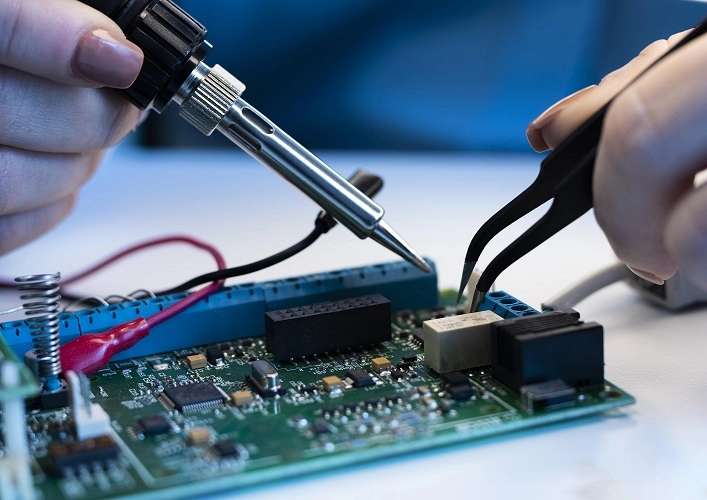
IWDF Solutions provides specialized IC unlock and IC decryption services for industrial, automotive, medical, and security electronics manufacturers. Our in‑house laboratory uses advanced FIB, laser, and side‑channel techniques to extract firmware and critical data under strict legal and confidentiality frameworks. We focus on compliant use cases such as failure analysis, IP protection, and secure migration from obsolete components, and also offer custom embedded software development and long‑term technical support when needed.
How To Decrypt an IC?
IC unlock and decryption is a highly specialized process that combines advanced equipment, semiconductor know‑how, and strict legal compliance. The following workflow shows how we typically handle an IC unlock project from first contact to final data delivery, so you know exactly what to expect at each stage.
1. Identify the IC and Its Protection Features
Before any action is taken, it’s essential to determine:
The manufacturer and model of the chip (e.g., STM32, PIC, Atmel)
Its packaging type (QFP, BGA, etc.)
Any built-in security mechanisms (e.g., readout protection, fuse bits, encryption layers)
This initial analysis shapes the decryption strategy and tool selection.
2. Physical Access and Decapsulation
Gaining access to the chip’s die is a prerequisite for most decryption techniques. Depending on the chip, this may involve:
- Chemical decapsulation using acid
- Laser decapsulation for precise access
- Mechanical polishing for low-cost packages
- Extreme care is taken to preserve the die surface and bonding pads.
3. Apply Targeted Decryption Techniques
Once exposed, the IC is analyzed using one or more of the following:
- FIB (Focused Ion Beam) to rewire internal structures or bypass fuses
- Laser Fault Injection to induce logic errors that reveal protected data
- Side-Channel Analysis to extract cryptographic keys from power or EM signals
- Microprobing to directly read signal lines on the silicon surface
The choice of method depends on the chip’s architecture, security level, and the required output (e.g., firmware dump vs. functional logic map).
4. Extract and Interpret Data
After breaching protection, data is carefully extracted—whether it’s EEPROM content, firmware code, or encryption keys. This raw data often needs to be:
- Verified for completeness and accuracy
- Decrypted (if encryption is applied)
- Converted into usable formats for further analysis or reproduction
- Proper checksum validation and cross-referencing are crucial in this step.
5. Comply With Legal and Ethical Standards
Not all IC decryption projects are legally permissible. We strongly advise:
Performing due diligence on the use case (e.g., failure analysis, security research, legacy device recovery)
Ensuring the process complies with local laws and intellectual property regulations
We operate under strict internal protocols and require NDAs for all commercial engagements. This ensures that our global clients can rely on fully compliant, documented procedures aligned with local regulations.
Our IC Unlock Technologies
We utilize a range of advanced techniques to extract internal information from integrated circuits (ICs) in a controlled and systematic way. Our goal is to support clients in failure analysis, legacy system recovery, and competitive benchmarking—while maintaining confidentiality and ethical boundaries.
FIB-Based Decryption
Focused Ion Beam (FIB) is one of the most precise and non-destructive tools in our decryption toolkit. By directing a highly focused gallium ion beam onto the IC surface, we can:
Expose internal wiring and logic gates
Cut or rewire traces for further probing
Access buried layers for reverse engineering
This technique is especially valuable for high-density chips and ASICs, where traditional probing is insufficient.
Laser Attack Techniques
Laser-based techniques enable selective removal of packaging materials or even alteration of transistor states. Depending on the IC type and protective layers, we may apply:
Infrared laser decapsulation for non-invasive access
Laser fault injection to observe logic behavior under stress
Laser ablation to remove top metal layers with high precision
Laser attacks are often combined with side-channel analysis for enhanced accuracy.
Side-Channel Analysis
This non-invasive technique monitors indirect information such as power consumption, electromagnetic emissions, or timing data during IC operation. By analyzing these “leaks,” we can infer:
Encryption keys
Firmware behavior
Functional logic states
We deploy advanced signal processing and AI-based pattern recognition to maximize the efficiency and reliability of this approach.
Compliance warning:
IWDF Solutions strictly complies with international intellectual property laws and local regulations in the regions where our clients operate. Before accepting any IC decryption project, we review the legal basis, intended use, and ownership of the target device together with the client.
We only accept projects that are clearly authorized, such as failure analysis, legacy system recovery, in‑house IP protection, or security research. For all commercial engagements, we sign mutual NDAs and follow documented internal procedures for data handling and sample management.
Why Do Clients Need IC Decryption?
Accelerate engineering and maintenance by recovering firmware from legacy or unsupported devices so that systems can be repaired or migrated without redesigning from scratch.
Support failure analysis and root‑cause investigation when no original design files or vendor support are available.
Enable secure platform upgrades by understanding existing implementations before moving to new hardware.
Intellectual property protection and defense
Collect technical evidence in IP or patent disputes by independently analyzing third‑party devices and comparing them with your own designs.
Evaluate and strengthen your own security mechanisms by identifying vulnerabilities in encryption, key storage, or readout protection.
Current IC decryption methods:
- Software attack
This technology usually uses the processor communication interface and exploits the security vulnerabilities in the protocol, encryption algorithm or these algorithms to attack.
- Electronic detection attack
This technology usually monitors the analog characteristics of all power and interface connections of the processor during normal operation with high time resolution, and implements the attack by monitoring its electromagnetic radiation characteristics.
- Fault generation technology
This technology uses abnormal working conditions to make the processor error, and then provides additional access to attack.
- Probe technology
This technology directly exposes the internal wiring of the chip and then observes, manipulates, and interferes with the microcontroller to achieve the purpose of the attack.
The IC decryption models that IWDF Solutions has completed in compliance are:
The following list shows a selection of IC models we have successfully decrypted in compliant projects. It covers common MCU, EEPROM, and flash families widely used in industrial and embedded systems. If your device is not listed, please contact us with the exact part number and package, as many more ICs are supported.
- STM8S903
- CKS32F051K8-QFN32
- PIC16F716-I-SO
- BR24C32F-SOP8
- MSP430G2253
- S34ML08G201TFI00
- STM32L151R8H6
- W25Q128JVXXM
- PIC30F4011-QFP44
- PIC18F1330-E-SS
- ATMEGA2560V-QFP100
- ATMELF16V8B
- PIC16C57C
- APM32F103
- ATMEGA128A
- ATMELF16V8B
- MX25L3233I
- STM32F042K6T6-QFP32
- MDT10p509-sop8
- APM32E103RC
- MC908GR16CFAE
- ATMEGA168A-PU
- ATMEGA8-QFP32-FZX-FLASH
- PIC12F1572-SOP8
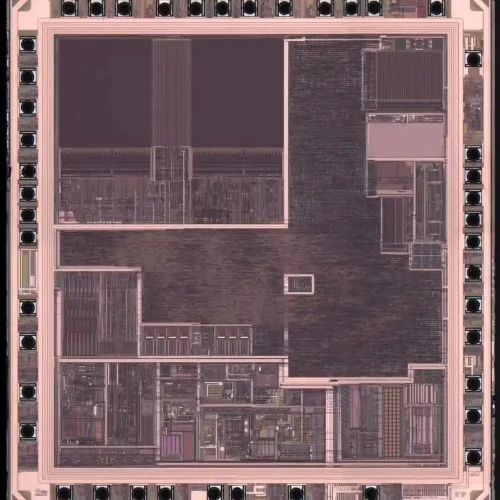
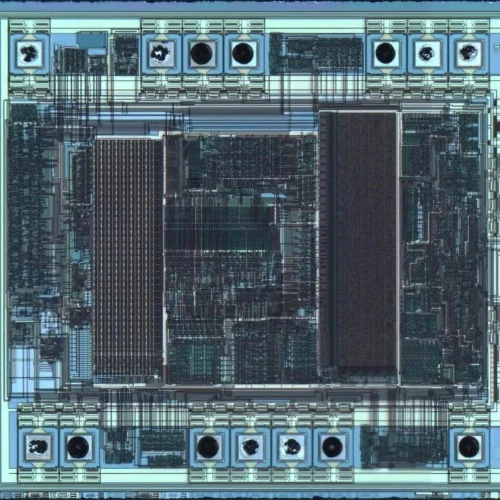
IC Unlock Process Step-by-Step
Understanding the process helps clients plan, budget, and evaluate technical feasibility. Here’s how a typical IC decryption project unfolds:

Initial Consultation & NDA
We begin with a technical briefing and confidentiality agreement.
You share the target IC type, suspected package, and decryption goal.

Chip Identification & Imaging
We use X-ray, SEM, or optical microscopy to determine chip structure.
Key layers and security features are mapped before physical tampering.

Technology Selection
Based on IC type (MCU, EEPROM, ASIC, etc.), we choose the most effective decryption approach.
In some cases, multiple techniques are combined for higher success rates.

Decryption Execution
FIB, laser, and side-channel techniques are applied in a controlled lab.
We document each step with imaging, voltage mapping, and signal tracing.

Data Extraction & Validation
Once access is achieved, we extract firmware, encryption keys, or logic data.
All output is validated to ensure integrity and usability.

Reporting & Handover
A full technical report is prepared, including raw data, interpreted results, and risk analysis.
Support is available for integration, emulation, or further engineering.
Frequently Asked Questions
IWDF Solutions also provides high-security IC encryption technology. If you need it, please contact us.
IC unlock and decryption are only legal when performed with proper authorization and in full compliance with local laws and regulations. Typical lawful use cases include in‑house failure analysis, recovery of your own legacy products, security research under contract, and IP dispute support handled by your legal team.
Success rate depends heavily on the specific IC family, protection level, and the quality and quantity of samples you provide. Some common industrial and consumer devices can be handled with a relatively high success probability, while others with advanced security may only be partially recoverable or not feasible at all. Before you commit, we always perform a technical and legal feasibility assessment and provide an honest view of risk, cost, and expected outcomes.
Lead time is determined by device complexity, security features, and the techniques required. Straightforward projects may be completed within a few weeks, while complex devices and in‑depth analysis can require several months of iterative work and validation. We share an indicative schedule during the quotation phase and keep you updated on major milestones and findings.
Pricing is mainly driven by the difficulty of the target IC, the number of samples needed, lab time, and any additional engineering or reporting you require. After reviewing your IC part number, application, and objectives, we provide a clear quotation with estimated lead time and key assumptions. There are no hidden fees, and any significant change in scope is always discussed and agreed with you in advance.
For an initial evaluation, we typically need the exact IC part number, package type, photos of the PCB or device if available, and a short description of the application and your technical goal (for example, legacy firmware recovery, failure analysis, or security evaluation). This information allows us to quickly judge feasibility, risk level, and the most suitable technical approach.
We have experience with a wide range of MCUs, EEPROMs, and flash memories, including STM8/STM32, PIC, AVR/ATmega, MSP430, and many other industrial and automotive families. The model list shown on this page is only a selection of successfully completed projects; many additional devices are supported on request. If your part is not listed, you can send us the exact marking and we will assess it individually.
In addition to delivering the extracted firmware or data, IWDF Solutions can provide custom embedded software development and firmware adaptation services. We can help you port the recovered code to new hardware platforms, add or modify features, or integrate the firmware into a redesigned system. For long‑term programs, we can also offer ongoing technical support based on a separate service agreement.
All projects are executed under strict confidentiality, typically governed by mutual NDAs and documented internal procedures. Samples and data are handled in our own laboratory, with controlled access and traceable processes. Upon project completion, we can retain or securely delete project data and physical samples according to your internal compliance and security requirements.
Complete model and packaging information are required
Yes, we will verify the delivery.
Related Knowledge
When an integrated circuit is locked, repairs and research grind to a halt. Engineers face roadblocks, wasted time, and stalled…